Enjoy free shipping on local orders over R1500

Our Blog

Emerald Gemstone… Fit For a Queen!

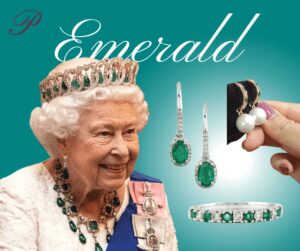
Did you know? Queen Elizabeth II, has been seen wearing emerald jewellery on various occasions. Notably, she wore an emerald necklace and earrings known as the Grand Duchess Vladimir Suite for her official Diamond Jubilee portrait in 2012. The late Princess Diana, also known as the Princess of Wales, had a fondness for emerald jewellery. She was often seen wearing a stunning emerald and diamond choker necklace, known as the Cambridge Emerald Choker, which she received as a wedding gift. There are several notable women in history who wore Emeralds The ancient Egyptian queen was famous for her love of emeralds and frequently wore them as a symbol of her power and wealth. The former First Lady of the United States, Jacqueline Kennedy Onassis, was known for her impeccable style. She frequently wore emerald jewellery, including an emerald and diamond engagement ring. Emeralds are connected to the concept of renewal and growth due to their vibrant green color. They symbolize freshness, vitality, and rejuvenation. They are associated with new beginnings, personal growth, and a positive outlook on life. Jacqueline Kennedy Onassis with Emerald and Diamond earrings. The iconic Hollywood actress and fashion icon Elizabeth Taylor owned a remarkable collection of jewellery, including emerald pieces. Her emerald and diamond necklace, known as the Taylor-Burton Emerald, was one of her most famous possessions. Earrings and ring designed and produced by Penchant Fine Jewellery. The first wife of Napoleon Bonaparte, Empress Josephine, was a renowned collector of jewellery, and emeralds were among her favoured gemstones. The wife of Napoleon III, Empress Eugénie of France, was known for her exquisite taste in jewellery. She often adorned herself with emeralds and other precious gemstones. Emerald designs by Penchant Fine Jewellery Fall in love with your own design. Book your private and exclusive personal consultation with Penchant Fine Jewellery. Book a free consultation with Jackie

Read More »
Clarity measures the presence of internal and external imperfections, known as inclusions and blemishes, respectively. Clarity is graded on a scale from Flawless (FL) to Included (I), with various grades in between. A diamond with fewer inclusions and blemishes will have a higher clarity grade and be more valuable.

What are the four C’s of diamonds and what does it mean?

The four C’s of diamonds explained All of the jewellery featured in this blog was designed and manufactured by Penchant Fine Jewellery. Diamonds are graded using the “4 Cs” system, which stands for Carat weight, Cut, Colour, and Clarity. These are the four key factors that determine the quality and value of a diamond. Here’s a brief overview of each grading factor: Carat weight: Carat weight is the measurement of a diamond’s size, with one carat equivalent to 0.2 grams. Diamonds are typically sold in fractions of a carat, and larger diamonds are generally more valuable. Cut: The cut of a diamond refers to its proportions, symmetry, and polish, which affect how well the diamond reflects light and how sparkly it appears. A well-cut diamond will have excellent brilliance, fire, and scintillation, making it more valuable. There are several different types of diamond cuts, each with its own unique characteristics and appearance. Some of the most popular diamond cuts include: Round Brilliant Cut: This is the most popular, common and classic diamond cut, featuring a round shape with multiple facets that are designed to maximize the diamond’s brilliance, fire, and scintillation. Round brilliant cut diamonds are known for their exceptional sparkle and are often used in engagement rings. Princess Cut: The princess cut is a square or rectangular shape with sharp corners and a brilliant-cut style. It is known for its contemporary and modern appearance, with a combination of step-cut and brilliant-cut facets that create a distinctive pattern and high sparkle. Emerald Cut: The emerald cut is a rectangular shape with step-cut facets and trimmed corners. It is known for its elegant and sophisticated appearance, with long, linear facets that create a “hall of mirrors” effect and emphasize the diamond’s clarity and colour. Asscher Cut: The Asscher cut is a square shape with step-cut facets, similar to the emerald cut, but with a smaller table and higher crown. It has a unique “X” pattern in the centre and is often chosen for its vintage and Art Deco-inspired look. Cushion Cut: The cushion cut is a square or rectangular shape with rounded corners and larger facets that create a pillow-like appearance. It is known for its romantic and soft look, with excellent brilliance and a vintage charm. Marquise Cut: The marquise cut is a long, narrow shape with pointed ends, resembling the shape of a football or boat. It is known for its elongating effect on the finger and is often chosen for its unique and distinctive appearance. Oval Cut: The oval cut is an elongated, oval-shaped diamond with brilliant-cut facets that maximize its sparkle. It is known for its elongating effect on the finger and offers a similar appearance to the round brilliant cut but with a more unique shape. These are just a few of the many different diamond cuts available, and each cut has its own unique characteristics and appeal. The choice of diamond cut is largely based on personal preference and style, as well as budget considerations. It’s important to choose a diamond cut that reflects your taste and preferences, while also considering the diamond’s overall quality and value. Colour: The colour of a diamond is graded on a scale from D (colourless) to Z (light yellow or brown). The most valuable diamonds are completely colourless, with less colour indicating a higher grade. Clarity: Clarity measures the presence of internal and external imperfections, known as inclusions and blemishes, respectively. Clarity is graded on a scale from Flawless (FL) to Included (I), with various grades in between. A diamond with fewer inclusions and blemishes will have a higher clarity grade and be more valuable. In addition to the 4 Cs, diamonds may also be graded for other characteristics such as fluorescence, which refers to how the diamond reacts to ultraviolet light, and shape, which can affect its overall appearance. Different grading laboratories may also use slightly different grading scales or terminology, so it’s important to understand the specific grading system being used when evaluating a diamond’s quality.

Read More »

Explore the rare CSARITE colour changing gemstone

Join Jackie on her Turkish adventure and exploration of the CSARITE mine This mine is home of the CSARITE gemstone, a gemstone which changes colour depending on the light source it is exposed to. Jackie Hahn, owner and lead designer of Penchant Fine Jewellery, has been invited to visit the mine in Turkey at one of the coastal towns called Bodrum. https://penchantdesign.com/ A photo collage of some Jackie’s adventures in Turkey. Where and what is the CSARITE mine Location, a single site, single mine gem in the rural countryside of the Mugla province of South West Turkey, roughly 25km from the small city of Milas, lies the only mine currently known to produce CSARITE®. Located in the westernmost part of the infamous Menderes Massif, the mine is positioned in one of the most continuously deforming areas of the world. At the peaks of the Ilbir mountains lies the world’s only CSARITE® mine more than 3000ft above sea level This, alongside its remote location continues to test modern engineering and technology. It is only because of perseverance and ceaseless cooperation with local communities that Milenyum continues to successfully extract this magnificent gemstone from the Turkish landscape. A New Gemstone for a New Generation Why is the CSARITE® so unique Found in only one place in the world, in a single mine in the rural Turkish mountains of the ancient region of Anatolia, CSARITE® is amongst the world’s rarest and most exquisite gemstones. With a rare and natural ability to shift colours under different light sources, CSARITE® ceaselessly transforms by day and night, indoors and out. Exhibiting a spectrum of natural colours from earthy pistachio and olive greens to golden campaign yellows, deep sunset gingers, and soft pinks and reds, CSARITE® is dynamic and expressive. Join us on this adventurous journey. We will be sharing stories and pics throughout.
Read More »

Which gemstones and metals match

Ever wondered whether there are rules or only guidelines regarding the matching of Diamonds or Rubies yellow gold or rose gold? Here are some guidelines, hints, and tips on how to match different gemstones and metals. There are certain metals and stone combinations that goes well together, however the colour of metal might not suit your skin tone. It is often a matter of personal taste. When you come in for a consultation at Penchant Fine Jewellery, you will have the opportunity to match your desired metal to your skin tone. As a designer, I will advise you throughout your journey. For now, I would like to suggest the following and share some helpful guidelines. From time to time, I love designing something out of the ordinary. Matching up colours that are opposite on the colour wheel. This tends to work quite well. For example: Red and blue, purple, and yellow, violet, and yellow and of course, Autumn colours, or ‘colder’ winter colours in different hues. The world is your oyster. This is one of the reasons why we offer a free consultation, so that you can play around with colour combinations and ideas until your dream design comes true. I often just take coloured stones and mix and match them to see what looks good and what doesn’t. My favourite rainbow combos are, pink (raspberry Garnet, rhodolite), matched with Peridot Greens and London Blue Topaz. My second favourite is Sapphires, Rubies, Emerald and Tanzanite. I really admire those colours together. My favourite metal combos are white metal colours combined with rose gold. For those who are not too fond of rose gold, a white metal and yellow gold combo also blends well. In our shop, our blossom daisy range is the perfect example. With these designs we go all out and use all three colour metals, white, yellow, and rose. From all aspects, this compliments this collection. I really enjoy playing around with colour gemstone and metal combinations. If you have anything specific in mind, please do not hesitate to contact Penchant Fine Jewellery. As lead designer I am happy to advise you. https://penchantdesign.com/customise-your-dream-jewellery-piece/ Do remember that these are simply guidelines and not rules set in stone. Should you love the look, your jewellery piece will bedazzle. Yellow, green, and red compliment yellow gold, however rose gold can be paired with red as well. Rose gold is ‘flatters’ purple, and if you want to be different, use blue tones with rose gold. Diamonds or even Moissanite makes any coloured stone offset look splendid; it is always a winner. Some colour combinations that have been quite popular in the last century, is matching a beautiful peach colour Morganite, with some diamonds and rose gold, or even just diamonds in Rose gold. This combination creates a beautiful and unique look. There are certain metals and stone combinations that goes well together, however the colour of metal might not suit your skin tone. It is often a matter of personal taste. When you come in for a consultation at Penchant Fine Jewellery, you will have the opportunity to match your desired metal to your skin tone. As a designer, I will advise you throughout your journey. Contact Us – Penchant Design Follow this link to see our giveaway: https://penchantdesign.com/win-a-moissanite-with…/ 079 471 7324 info@penchantdesign.com 62 Huguenot Street, Franschhoek, South Africa. https://penchantdesign.com/ https://www.instagram.com/penchant_design/
Read More »

The Glitz and Glam

It’s all about the glitz and the glam, the sparkle and the shine, the colour, cut and clarity.  The stone that declares love, their illustrious shine have inspired songwriters over the decades, and who cannot help but sing along when you hear “and diamonds are a girl’s best friend..” Some many fads come and go, however diamonds, have, despite it being around for millions of years, its popularity and demand continue to increase among the rich and famous. This stone is one of the most sought-after gemstones – so much so, that some of the world’s most famous diamonds are worn by royals and celebrities. We hope you all loved reading about the history and symbolic meaning of the Diamond gemstone. Did you find anything particularly fascinating? If yes, please share your thoughts with us below. Like them, or loathe them, the British royal family has exceptional taste when it comes to their jewellery.  Their diamond collection can only be called pristine.  Did you know that traditionally the British royal family pass down their family heirlooms from generation to generation, or members of the family will borrow pieces from the Queen? There is something special about diamonds that have been passed down from generation to generation and a lovely tradition to start if there aren’t pieces which have been handed down in your family.  I must admit though, that borrowing diamonds to family fills me with all kinds of anxiety 😊. Undoubtedly one of the most famous tiaras in history was worn by the Duchess of Cambridge on her wedding day. The beautiful Cartier Halo Scroll Tiara is made up of 739-cut diamond and 149 baguette of diamonds surrounding it, was created in 1936 as a wedding gift to Elizabeth the Queen Mom.  For the wedding, this tiara was lent to Kate by the Queen. One of my all-time favourites must be the ‘Cambridge Lovers’ Knot Tiara’ famously worn by Princess Diana on her wedding day. This beautiful Tiara headpiece is made of Diamond and 19 hanging pearls all set in silver and gold. I love how elegantly these two gemstones work together. After Princess Diana and Charles got divorced, the Tiara was returned to the Queen. The Duchess of Cambridge loves to borrow this masterpiece on special occasions A famous South African celebrity well known in Hollywood, Charlize Theron stepped out at the 2014 Oscars in a 21-carat emerald-cut diamond necklace and diamond earrings. Her drop-dead gorgeous jewellery is valued at $15million dollars. The next famous look was previously seen on Audrey Hepburn when she promoted her movie, Breakfast at Tiffany’s. More recently Lady Gaga wore the iconic 128-carat yellow diamond necklace to the 2019 Oscars. Can we just all say WOW! Wait for it …… the most expensive jewel ever to grace Hollywood was not worn at the Oscars or on the red carpet, it was in fact worn by singer Carrie Underwood at the 2013 Grammy awards. The 381-carat diamond necklace costs a whopping $31 million dollars. I know these prices seem crazy and totally farfetched, but you too could be your very own Princess for an inch of the price. We have so many beautiful diamond pieces in our store that are calling your name. Stay Beautiful, Jackie Hahn & Penchant Design Team
Read More »

Diamond History

The Diamond Birtshone is rich for many reasons, find out why! We are dripping in diamonds this month and we cannot wait to share how the glitz and glam birthstone came about many moons ago. This blog aims to share the history and traditions of this marvellous birthstone.  Who named the Birthstone of April as Diamond?  Did you know that diamonds’ key component is Carbon and under extreme heat and pressure it evolves into shiny stone? The name is derived from the Greek word ‘Adamas’ which directly translates to unconquerable. We will dive a little deeper into its meaning later on in the blog. We first would like to share more about its origin. When were diamonds discovered? The earliest diamond was found in India around the 4th Century BC. The youngest of these deposits was formed over 900 million years ago. These stones travelled a route known as the silk road that connects India and China.  Up until the 18th century, India was the main source of diamonds in the world. When their mines were depleted, the quest for diamonds began worldwide. Although there were small deposits found in Brazil it did not really qualify for the vast supply needed to meet the ever-growing demand. In 1866 a young 15 year old by the name of Erasmus Jacobs was exploring the banks of the orange river when he came across a rather large pebble. It turns out the pebble was in fact a 21.25-carat diamond. Turn the clock forward ever so slightly to 1871 a colossal 83-50 carat deposit was located in the shallow hill named Cloesberg Kopje. Thousands of diamond prospectors were interested in this region and its discoveries. These discoveries lead to the first large-scale mining operation known as the Kimberly Mine. With a fully operational mine, it is no surprise that the world’s supply and demand chain increased and thousands of people all over the world were interested in purchasing high valued Diamonds. Healing & relationship properties When diamonds were discovered they were the most sought after because of their ability to refract light and engrave metal. These gemstones were commonly worn as a form of protection against evil and during battle. Furthermore in the Dark ages diamonds were a form of medical aid and were thought to cure many illnesses and heal wounds.  Moreso, they are regarded as a symbol of love, romance and commitment. Owning to their original name of ‘Adamas’ a Greek-derived word meaning unconquerable. This symbolic meaning is a testimony to our own unwavering love and commitment to one another. No wonder everyone says diamonds are fit for a princess or a Queen.  A very well sought after gemstone such as the diamond is mostly celebrated on one 60th Wedding Anniversary. Spending 60 years of your life with a loved one stays true to the symbolic meaning of this gemstone. The pair is most definitely unconquerable.  We have this exquisite birthstone available for you to view in our store. We would love for you to come to visit and see our collections of loose stones on display, or have something unique made, just for you.   Stay Beautiful, Jackie Hahn & Penchant Fine Jewellery Team

Read More »